


For years, SEO success was simple to explain. Rank higher on Google, earn more clicks, and grow organic traffic.
That still matters. But it is no longer the full picture.
A customer may now see an AI Overview before the usual search results. They may use Google AI Mode to compare options. They may ask an AI assistant for ideas. Your brand may be mentioned or cited before the user ever visits your site.
That changes what search visibility means.
Today, the better question is not only:
“Where do we rank?”
It is also:
“Where does our brand appear when people search, compare, and ask questions online?”
The future of SEO is not about leaving Google behind. It is about building a wider search presence across search engines, AI tools, and other places where people find answers.
Search Visibility Now Means More Than Ranking on Google
Search visibility is how often and where your website, content, products, or brand appear when people search for topics linked to your business.
In the past, this mostly meant organic Google rankings.
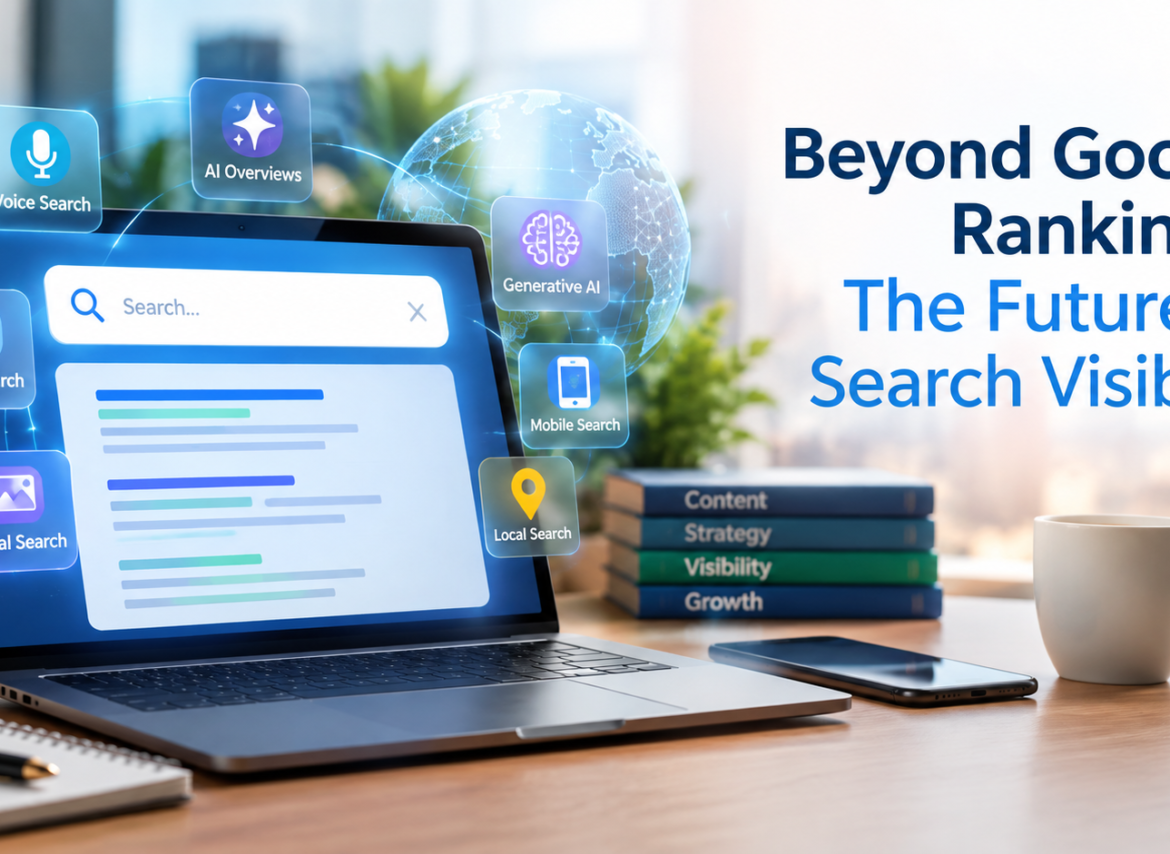
Today, it can include traditional search results, AI Overviews, AI Mode, Bing, Copilot, AI citations, product results, images, videos, and chat-based search tools.
Google says its generative AI search features still rely on its core Search ranking and quality systems. This means strong SEO basics remain important.
So SEO beyond Google does not mean starting again.
It means keeping the same strong base while tracking more places where your brand can appear.
Cresconnect’s guide to Generative Engine Optimisation for ecommerce brands explains how this wider search environment affects the way brands create and structure content.
Rankings Still Matter, But They No Longer Tell the Full Story
Imagine your page ranks fourth for an important commercial search.
Your rank tracker shows no major change.
But an AI answer appears above the normal results. It mentions two competitors and cites another website. The user gets enough information from that answer and never reaches your listing.
Your ranking stayed the same.
Your visibility did not.
This is why rankings alone can miss part of the search journey.
A ranking tells you where a page sits. It does not always show how much attention it received. It does not tell you whether an AI answer appeared. It also does not show whether your brand was mentioned or another source was cited instead.
Google has also added dedicated Search Console reporting for visibility within generative AI features such as AI Overviews and AI Mode. These reports were rolled out worldwide by August 2026.
That is a clear sign that SEO visibility now needs a wider view.
Traditional SEO Visibility vs Today’s Search Landscape
Traditional SEO View | Wider Search Visibility View |
Keyword rankings | Where and how the brand appears |
Organic clicks | Clicks, mentions, and citations |
Google results | Search engines and AI platforms |
Ranking pages | Pages and sources being surfaced |
Organic traffic | Visibility, engagement, and conversions |
Position changes | Presence across search journeys |
The new model does not replace the old one.
It adds more context.
Rankings and clicks still matter. They simply need to sit beside newer signals.
AI Is Expanding Where Brands Can Be Discovered
Search queries are becoming more detailed.
A user may once have searched:
“best running shoes”
Now they may ask:
“Which lightweight running shoes are good for beginners who mostly run on roads?”
That question gives much more context. It includes a product type, a user need, and a use case.
Google says AI Mode can handle complex questions and comparisons. It may also use a technique called query fan-out, where several related searches help build a fuller answer.
This changes how content should be written.
A page should not only repeat a target keyword. It should explain the topic clearly. It should answer useful questions. It should compare options and show where a product or service fits.
This is where SEO, AEO, and GEO begin to overlap.
Cresconnect’s guide to Answer Engine Optimisation for ecommerce brands explains how clear answers and useful context can help content work across both search and AI-led experiences.
Search Behaviour Is Moving Beyond the Traditional Results Page
People are already using AI summaries as part of search.
Pew Research Center reported in 2026 that 60% of U.S. adults surveyed said they had read AI summaries at the top of search results. This applies to U.S. adults, so it should not be treated as a global benchmark.
Still, it shows that AI-led search is becoming part of normal online behaviour.
For brands, this matters because a customer may discover a company before visiting its website.
A mention can build awareness.
A citation can add trust.
A later brand search may lead to the visit.
Search visibility can therefore create value even when there is no click straight away.
The Metrics That Matter Beyond Keyword Rankings
A modern search visibility strategy should still track rankings. But it should also look at a wider set of signals.
Organic impressions show how often your pages appear.
Non-brand visibility shows whether new users can find you without searching your name.
AI mentions show whether your brand appears in relevant AI answers.
Citation visibility shows whether your website is used as a source.
Query coverage shows how many important customer questions bring your brand into view.
Competitor presence shows which brands appear when yours does not.
Referral traffic shows visits from search and AI tools that can be identified.
Conversions and revenue show whether visibility creates real business value.
Microsoft is already reporting several of these signals in Bing Webmaster Tools. Its AI Performance reporting includes citations, cited pages, grounding queries, topics, intents, and Citation Share.
The direction is clear.
Search visibility is becoming broader than position tracking.
Building Visibility Across Search and AI Platforms
The answer is not to create a separate strategy for every new AI tool.
Start with strong SEO basics.
Your website still needs to be crawlable, indexable, useful, and easy to use.
Your content also needs to be clear.
Explain what your business does. Answer real customer questions. Use clear headings. Connect related topics. Show first-hand knowledge where possible. Support key claims with trusted sources. Make product, service, and company details easy to check.
These steps help people first.
They also make it easier for search and AI systems to understand your content.
Google says there are no special technical requirements for appearing in AI Overviews or AI Mode beyond the normal requirements for Search.
That makes strong SEO foundations the right place to start.
Trust is just as important. Cresconnect’s guide to building stronger website trust signals explains how clear expertise, reliable information, and stronger brand signals support search performance.
From Rankings to a Wider Search Presence
A simple way to think about modern search presence is:
Rankings → Mentions → Citations → Visits → Engagement → Conversion
Not every customer will move through those stages in order.
Someone may first see your brand on Google. Later, they may see it in an AI answer. Then they may return through a branded search.
Another person may find one of your guides through a citation and visit the site directly.
This is why search performance should be viewed across the wider customer journey.
Cresconnect’s AI Search Visibility Audit framework takes a similar approach by looking at brand mentions, citations, query coverage, competitors, and business outcomes alongside standard SEO metrics.
The Future of SEO Is Broader, Not Separate
SEO is not being replaced.
Its role is getting wider.
The core work stays familiar:
Understand search intent.
Publish useful content.
Keep the website technically sound.
Build trust and authority.
The difference is that the result is no longer just a ranking.
A useful future-focused strategy should cover three areas.
- Rankability: Can your content compete in normal search results?
- Retrievability: Can search and AI systems understand and surface your information?
- Commercial relevance: Does that visibility reach people who may become customers?
This is a wider view of SEO, but it still starts with the same basics.
Academic work is moving in the same direction. The 2024 KDD paper that introduced Generative Engine Optimisation treated visibility inside generated answers as a separate optimisation problem from traditional ranked search results.
Build Search Presence, Not Just Search Positions
Google rankings still matter.
But they should not be the only way a brand defines search success.
Customers can now discover businesses through search results, AI summaries, citations, recommendations, images, videos, and chat-based tools.
A modern search visibility strategy should therefore answer two questions:
Where do we rank?
and
Where are we being discovered?
The strongest brands will keep improving organic rankings. They will also track mentions, citations, query coverage, and conversions.
That is the shift from chasing positions to building a stronger search presence.